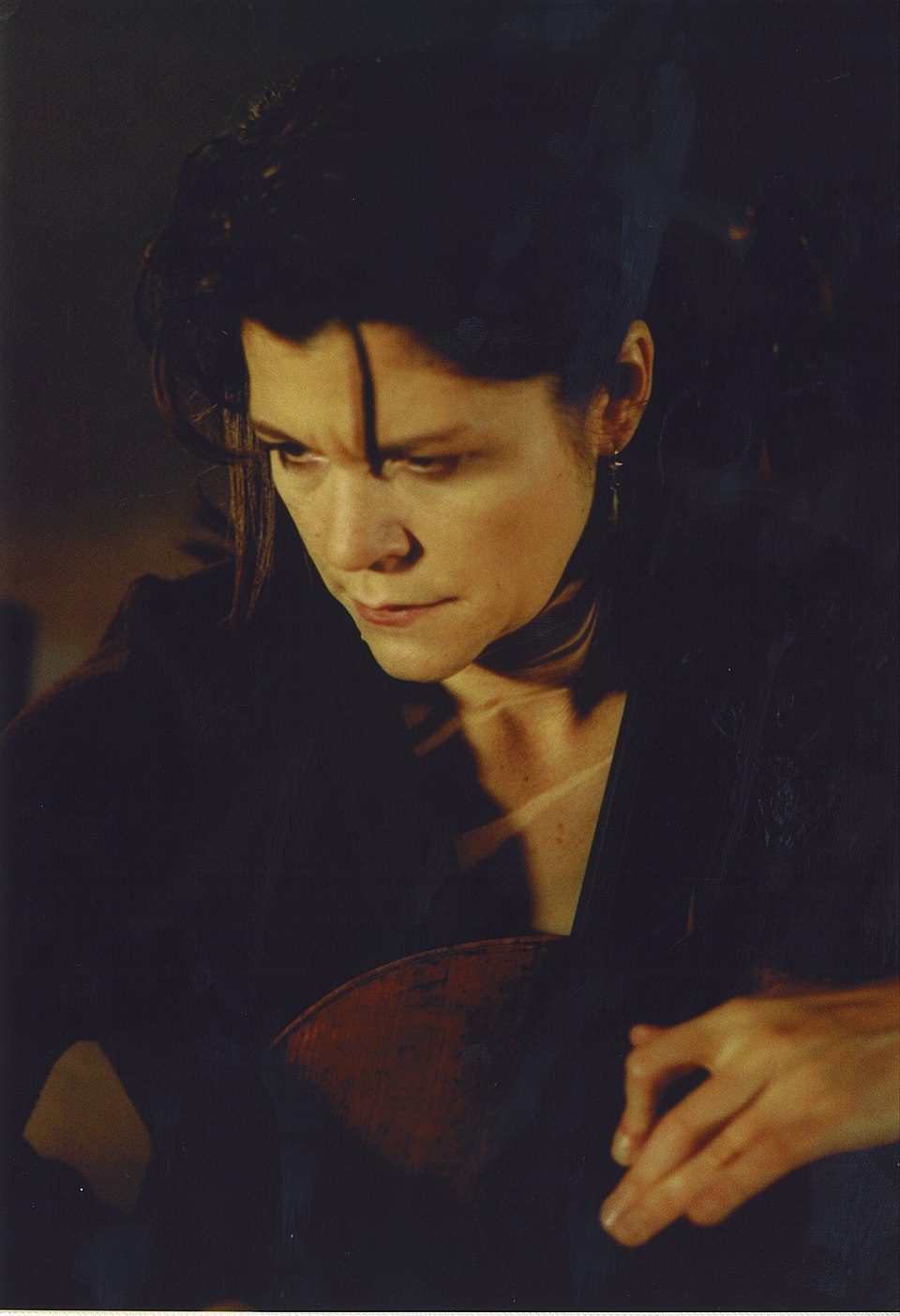
The Creative Nexus: Sonia Wieder-Atherton and the Evolution of Cello Repertoire
Sonia Wieder-Atherton, the acclaimed Franco-American classical cellist, stands as a testament to the profound power of artistry that transcends boundaries. Her name is synonymous with a compelling blend of technical mastery and profound interpretive depth, establishing her as a unique voice in the world of classical music. While her powerful solo performances and insightful chamber music collaborations have captivated audiences worldwide, one of the most compelling aspects of her career is her remarkable ability to inspire some of today's most distinguished composers to create new works specifically for her. This deep artistic symbiosis has not only enriched the cello repertoire but also solidified her legacy as a muse for contemporary creativity, making the journey of
Sonia Wieder-Atherton violoncelle a fascinating study in musical innovation.
A Legacy Forged in Diverse Cultural Tapestries
Born in San Francisco in 1961 to a Romanian mother and an American father of Jewish origin, Sonia Wieder-Atherton’s upbringing was steeped in a rich tapestry of cultures. This diverse heritage undoubtedly contributed to her broad artistic perspective and ability to connect with music on a universal level. Her early years were spent in New York before her family moved to Paris, a city that would become central to her musical education.
It was in the venerable halls of the Conservatoire de Paris that Wieder-Atherton began to hone her extraordinary talent. She studied under the esteemed Maurice Gendron, a legendary figure in cello pedagogy, and further refined her chamber music skills with Jean Hubeau. This foundational training in Paris was followed by a pivotal period of study with the incomparable Mstislav Rostropovich, a titan of the cello world whose influence on young musicians was profound. Her pursuit of excellence then led her to the Moscow Conservatory, where she spent two intensive years under the tutelage of Natalia Shakhovskaya, further solidifying her technique and musical understanding within the rigorous Russian tradition. This comprehensive and diverse education, spanning multiple cultural and pedagogical approaches, laid the groundwork for her remarkably versatile and impactful career.
Her immense talent was recognized early, culminating in a notable mention at the prestigious Rostropovich Cello Competition in 1986. This achievement marked her formal entry into the international classical music scene, setting the stage for a career defined by artistic exploration and groundbreaking performances.
The Muse and the Master: Inspiring New Cello Repertoire
Perhaps one of the most significant indicators of a musician's profound impact is their ability to inspire living composers. For
Sonia Wieder-Atherton violoncelle, this has been a hallmark of her career. A select group of master composers, drawn to her unique artistic voice, technical command, and interpretive courage, have dedicated significant new works to her. This honor is not merely a testament to her skill but to her capacity as an interpreter to breathe life into new musical languages and push the boundaries of the cello's expressive potential.
Among the illustrious names who have dedicated works to Wieder-Atherton is the eminent French composer Henri Dutilleux, a figure known for his sophisticated and lyrical contemporary music. His trust in her artistry speaks volumes about her ability to convey the intricate nuances of modern composition. Georges Aperghis, a composer celebrated for his innovative and theatrical approach to music, has also found inspiration in Wieder-Atherton. He dedicated two works to her, *Le reste du temps* and *Profils*, the latter for the compelling duo she forms with percussionist Françoise Rivalland. These pieces highlight her willingness to engage with challenging, avant-garde repertoire and her exceptional collaborative spirit.
Pascal Dusapin, another leading voice in contemporary French music, entrusted Wieder-Atherton with the premiere and development of a cello concerto, simply titled *Cello*. The creation of a full concerto for an artist is the ultimate tribute, demanding not only technical virtuosity but also a profound understanding of the instrument's capabilities and an ability to convey the composer's vision on a grand scale. Betsy Jolas and Ivan Fedele, both significant figures in contemporary music, have also contributed new compositions to her expanding repertoire. These dedications underscore a critical aspect of classical music’s evolution: the symbiotic relationship between a visionary performer and a daring composer. It’s through artists like Wieder-Atherton that new sonic landscapes are explored, and the instrument itself gains new voices and possibilities. For aspiring musicians, understanding this dynamic collaboration is crucial – it’s not just about mastering existing works, but about contributing to the future of the art form by actively engaging with contemporary creators.
A Versatile Virtuoso: From Solo Stages to Intimate Chambers
Sonia Wieder-Atherton's reputation extends far beyond her role as a muse for composers; she is a formidable performer in her own right. Her career as a soloist has seen her grace the stages of the world's most prestigious concert halls, performing with leading orchestras that span continents and musical traditions. She has been a featured soloist with the renowned Orchestre de Paris, the Orchestre national de France, the National Orchestra of Belgium, and the Orchestre Philharmonique de Liège. Her international reach is further evidenced by engagements with the Israel Philharmonic Orchestra, the Gulbenkian Orchestra of Lisbonne, the Orchestre de Chambre de Lausanne, and the Luxembourg Philharmonic Orchestra. Each of these engagements speaks to her versatility, her consistent demand at the highest level, and her ability to connect with diverse audiences globally. To explore more about her remarkable orchestral collaborations, you can read
Sonia Wieder-Atherton: Soloist with the World's Leading Orchestras.
Beyond her commanding presence as a soloist, Wieder-Atherton is also a deeply committed and sought-after chamber musician. This facet of her career showcases her ability to listen, interact, and create a cohesive musical dialogue with fellow artists. She has collaborated with an impressive roster of musicians, including distinguished pianists such as Imogen Cooper, Jean-Claude Pennetier, and Laurent Cabasso. Her chamber music partners also include fellow cellists Raphaël Oleg and Silvia Marcovici, the esteemed violist Gérard Caussé, and percussionist Françoise Rivalland. These collaborations highlight her flexibility and artistry, proving that her unique voice on the
sonia wieder-atherton violoncelle can both lead and blend seamlessly within an ensemble, enriching the collective musical experience. Her regular invitations to major international festivals further attest to her standing as a respected and in-demand artist across the full spectrum of classical performance.
Beyond Interpretation: Sonia Wieder-Atherton's Creative Voice
Sonia Wieder-Atherton's artistic vision is not limited to interpretation; she also possesses a keen creative voice as a composer and occasional arranger. This dual capacity offers a unique insight into her depth as a musician, demonstrating an understanding of music from its genesis to its performance. Her work as an arranger is notably showcased on her disc *A Couch in New York*, a project for which she collaborated with the acclaimed filmmaker Chantal Akerman. This venture allowed her to reimagine and adapt existing musical ideas, infusing them with her distinctive style and sensitivity.
Furthermore, Wieder-Atherton has composed original music for film, contributing to the emotional landscape of Benoît Barbier's *L'Amour conjugal*. Creating music for cinema requires a specific skill set – the ability to evoke mood, enhance narrative, and serve a visual medium, all while maintaining musical integrity. This expansion into composition showcases her innate musicality and her ability to translate abstract ideas into tangible sound, offering a fuller picture of her comprehensive artistic persona.
Her profound contributions to the arts have been recognized through prestigious awards. In 1999, the Académie des beaux-arts (France) awarded her the Grand Prix Del Duca, a significant honor acknowledging her exceptional talent and impact. Later, in May 2011, she received the prize of the Fondation Renée-et-Léonce-Bernheim pour les arts, les sciences et les lettres, an award that celebrates creative value across various artistic fields. These accolades underline her status not just as a leading cellist, but as a celebrated artist whose work consistently demonstrates profound creative merit. To learn more about her achievements, please visit
Sonia Wieder-Atherton: Franco-American Cello Virtuoso and Award Winner.
The ability of a performer to also compose and arrange offers invaluable insights into the creative process. It allows for a deeper understanding of a score's architecture and the composer's intentions, enriching the interpretive process. For aspiring cellists, exploring composition or arrangement can be a powerful tool for developing a more holistic understanding of music, enhancing both performance and personal artistic expression.
Conclusion
Sonia Wieder-Atherton embodies the very essence of a complete musician: a virtuoso performer, an insightful collaborator, and a creative force in her own right. Her journey, from rigorous classical training across two continents to inspiring master composers to expand the cello repertoire, speaks to an uncompromising dedication to her art. Through her compelling interpretations, her willingness to embrace new musical challenges, and her own creative contributions, she continually pushes the boundaries of what is possible on the
Sonia Wieder-Atherton violoncelle. Her legacy is not just one of captivating performances but of actively shaping the future of classical music, making her an enduring and truly inspiring figure in the pantheon of great classical artists.